
Global Plates: The People We Meet, The Food They Eat
Who: Mike Arguelles
What: Off-bottom oysters
Where: Biloxi, Mississippi
Recipe: Oyster Soup
Captain Mike Arguelles met me at the docks in Biloxi, Mississippi. His scruffy beard and happy eyes said it all: this is a practical, get-the-job-done oyster farmer who delights in telling funny tales. Arguelles had agreed to take me on his boat for the day to harvest 900 oysters for a local restaurant order.
We set across the Mississippi Sound, the sky gray and threatening rain, the water choppy. This wasn’t a leisurely cruise; the pace was clipped and Arguelles meant business.

Photo caption: Captain Mike Arguelles heads toward his oyster farm. Photo credit: Jill Dutton
Good thing, as business was booming. The previous oyster aquaculture had waned from natural disasters and other calamities, but due to the Mississippi Department of Marine Resource’s RESTORE-Act that taught potential oyster farmers the ins and outs of off-bottom oyster aquaculture, things were picking up. Since the reefs were damaged, the RESTORE-Act educated interested participants in oyster cultivation in cages, a supplemental method to use instead of the reefs.
Along with his wife Anita, Arguelles created the French Hermit Oyster Co.
We arrived at Arguelles’ plot in the waters of Deer Island. As the boat gently rocked against the waves, Arguelles’ helper began pulling up the cages. Brown slimy cages, filled with oysters, were then power sprayed to remove the muck that then flew into my face and hair. Once cleaned, the oysters were dumped onto a table and hand-picked to fill the bags for the restaurant order.
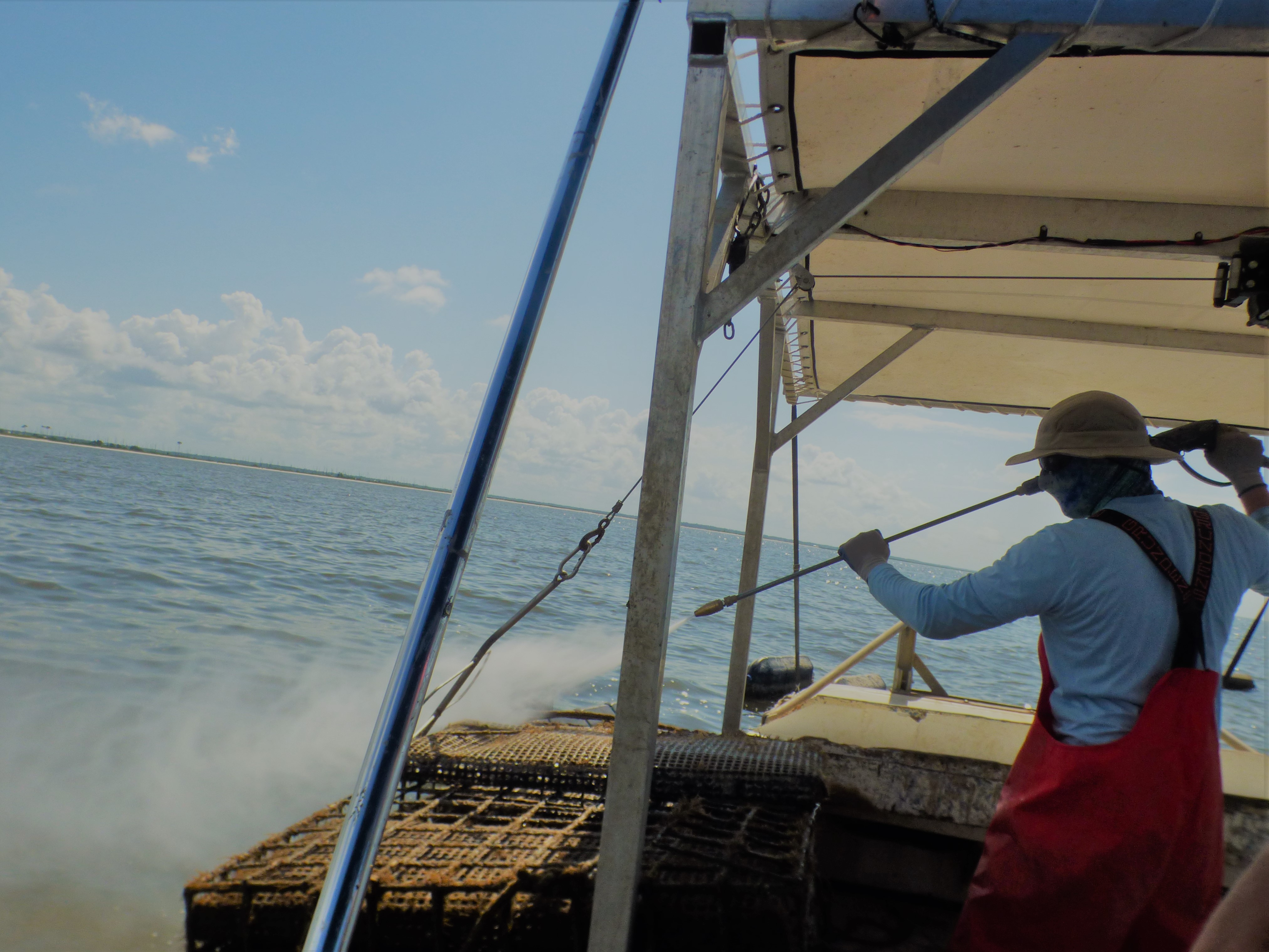
Photo caption: The harvested oysters are cleaned before counting. Photo credit: Jill Dutton
Mississippi Oysters
When asked his favorite way to eat oysters, Arguelles quickly replied.
“Raw. Always.”
On our trip, he opens a few oysters, fresh from the murky waters. He teaches me to place my mouth around the shell, then slurp. The oyster slides into my mouth along with the seawater, warm and salty.
The method for shucking oysters that he uses is the “Biloxi way,” he says.

Photo caption: Arguelles opens an oyster to sample fresh from the waters. Photo credit: Jill Dutton
“When you open the oyster, it has an eye, which is the muscle that’s attached to both shells. The bottom is attached to the top and you cut that loose in order to pry it open.
“I’ll open one for you the old Biloxi way: A pointed knife comes in and from the bill, whereas most of the modern chefs, they use a different kind of knife and pop the hinge instead. Old dog, new tricks… I can’t do it that way, but I like it this way for a couple of reasons. When you open the oysters, you have to cut that eye loose on one side before you can pry it open and then cut it loose from the other side, so you could take the top off. And, if you’re not careful about where you enter with your knife – and cut that oyster – it’s not good. And I see this so much, even in cooking magazines, they think speed is best, but it’s really important to not cut the oyster because it’s still living and it’s still a unit so I don’t want to cut it.”
Cutting it this way also allows the diner to eat the oyster from the wider bottom half and enjoy the “liquor” that Arguelles says is a key part of the experience.
The taste was the freshest I’ve encountered, flavored by the sweet waters of the Mississippi Sound.
Even though Arguelles’ favorite method is to eat them raw, Anita says her oyster soup recipe is always a treat for special occasions.
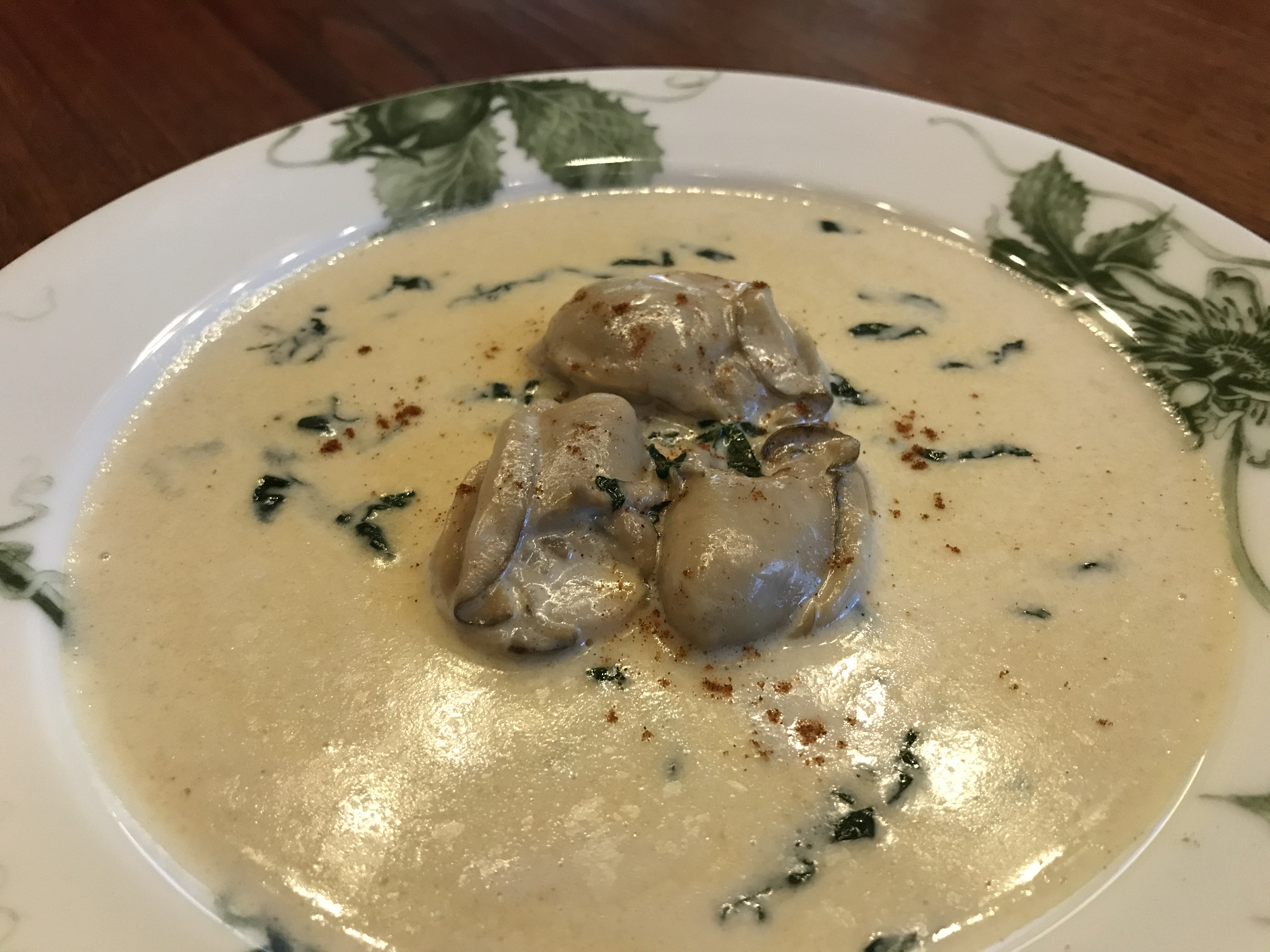
Photo caption: Oyster soup. Photo credit: Anita Arguelles.
Anita’s Oyster Soup
Serves 4
Ingredients:
- 1 tablespoon olive oil
- 1/2 cup chopped yellow onion
- 1/2 cup chopped green onion
- 4 tablespoons (1/2 stick) butter
- 24 fresh-shucked oysters
- 1/2 cup chopped fresh spinach
- 1/2 teaspoon minced garlic
- 1/8 teaspoon dried thyme
- 2 tablespoons chili oil
- The juices (liquor) from the oysters
- 3/4 cup whipping cream
- 2 cups whole milk
- 1/4 teaspoon white pepper
- Salt to taste
- In a large pot, add the olive oil and sweat the yellow onions, stirring until they are soft.
- Add the green onion and the butter, melt the butter, and add the oysters.
- Cook the oysters until done, then add spinach, garlic, thyme, and chili oil.
- Cook until spinach turns soft. Add the oyster juice, whipping cream, milk, and white pepper.
- Cook on low for 10 minutes. Salt to taste and serve.
Resources
Visit Coastal Mississippi
Listen to the podcast episode:
Follow the itinerary from Jill’s visit:
Read Jill’s previous article about Mike Arguelles that was published in American Essence Magazine.

During her 20-plus-year career, Jill has worked as a reporter, magazine publisher (Evolving Magazine since 2009), and freelance writer focusing on news, profiles, lifestyle, and wellness. In 2015, she started traveling the world writing about local food scenes, outdoor activities, liquor trends, 50+ travel, train travel, and wellness modalities.
Readers of Jill’s articles have come to expect an intimate look at authentic travel experiences. Jill recently launched her podcast, Global Journeys with Jill Dutton, and a syndicated food travel column, Global Plates: The People We Meet, The Food They Eat. With a specialty in human interest stories, Jill has written for Modern Farmer, American Essence, FIRST for Women, Woman’s World, Wine Enthusiast, AFAR, Roadtrippers, and many more print and digital publications.

 globaljourneyswithjilldutton.com
2 Comments Add yours